Three hundred years of a river crossing, told through the things you can still walk past. A ferry, an army, a fire, a canal, and the painters who came for the light and never left.
1722 onward
Before there was a town there was a ferry. John Wells started running one across the Delaware here in 1722, on the Old York Road between Philadelphia and New York, and the handful of buildings that grew up around the landing took the ferryman's name. It was Wells' Ferry, then Canby's Ferry, then from 1765 it was Coryell's Ferry, and it stayed that for twenty five years.
That is the thing worth holding onto about New Hope. It exists because this was a narrow, workable spot to get across a wide river, and everything that happened afterward happened because people were already passing through.
December 1776 and June 1778
In December 1776, with the revolution going badly, Washington ordered every ferry crossing from Morrisville up to Coryell's Ferry fortified so the British could not follow him over the water. Roughly six hundred men under General de Fermoy camped here for about two weeks. Washington came up from his headquarters more than once to work out the plan with his officers. On Christmas night he crossed nine miles downriver and took Trenton.
Eighteen months later the whole army came through. Starting June 19, 1778, more than twelve thousand Continental soldiers marched up the Old York Road and crossed from the landing here into New Jersey, a movement that took three days, on their way to Monmouth. For those three days this village was the busiest place in the country.
1790
Benjamin Parry bought the grist mill in 1784, added flaxseed oil and lumber operations, and built the stone house at 45 South Main that his family lived in for four generations. It is still there, a few doors up from us.
In 1790 his Pennsylvania mills burned down. He already had two mills across the river in New Jersey called the Hope Mill and the Prime Hope Mill, so when he rebuilt on this side he called the new one the New Hope Mills. The name stuck to the mill, then to the village, and when the borough was incorporated in 1837 that was simply what the place was called.
So the town is named after a rebuilt factory. Somebody's business burned to the ground and he named the replacement after the feeling of starting again, and two hundred and thirty years later it is on the road signs.
1830s
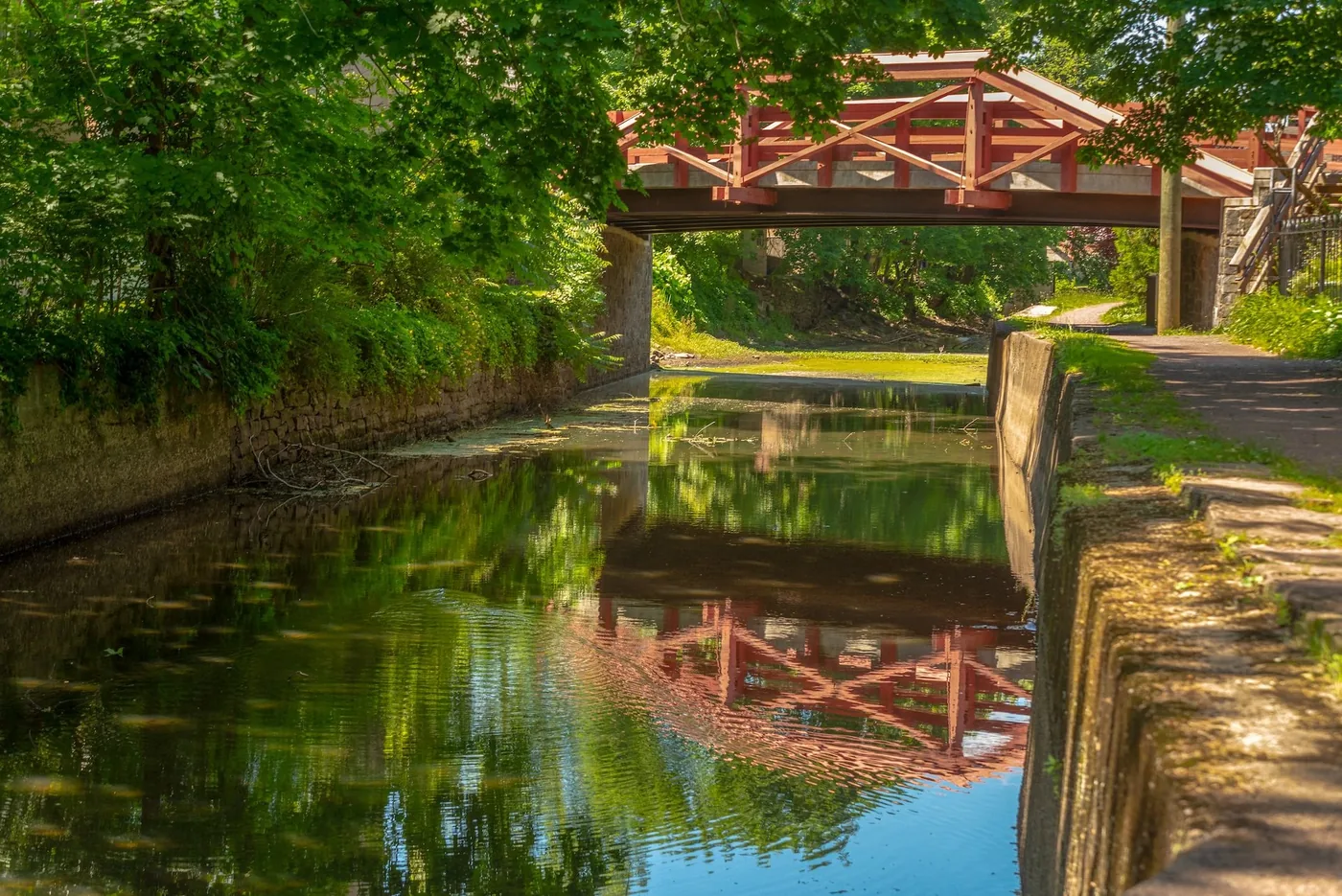
The Delaware Canal opened in the 1830s and ran sixty miles down from Easton, hauling coal on mule-drawn barges. It cut straight through New Hope one block back from the river, which is exactly where it still is. The canal made the town an industrial stop rather than just a crossing, and for a while that is what it was.
The barges are long gone but the canal and its towpath survived, which is unusual. Most working canals were filled in. You can walk this one from the middle of town, and the flat gravel path under your feet is there because mules needed somewhere to walk.
1899 onward
In 1899 William Lathrop moved into Phillips Mill, a disused mill complex dating to 1754 just north of town, and made it his home and studio. Other painters followed him out from Philadelphia and New York, drawn by the river light and cheap space, and what grew up here became known as the Pennsylvania Impressionists. Daniel Garber and Edward Redfield worked this stretch of the Delaware. By 1929 the artists had organised to keep the mill standing as a place to show work.
That is why there are still so many galleries on Main Street. It is not a recent idea. The town has been full of working artists for well over a century, and the ones here now are part of a continuous line back to Lathrop.
1939
By the 1930s the old Parry grist mill on the river was sitting empty. In 1939 a group bought it and turned it into the Bucks County Playhouse. It became one of the well known summer stock houses in the country, the kind of place where people worked out shows before taking them to New York, and it is still producing today.
The building itself goes back to the 1780s. It has been a mill, a ruin, and a theatre, which is a reasonable summary of the town as a whole.
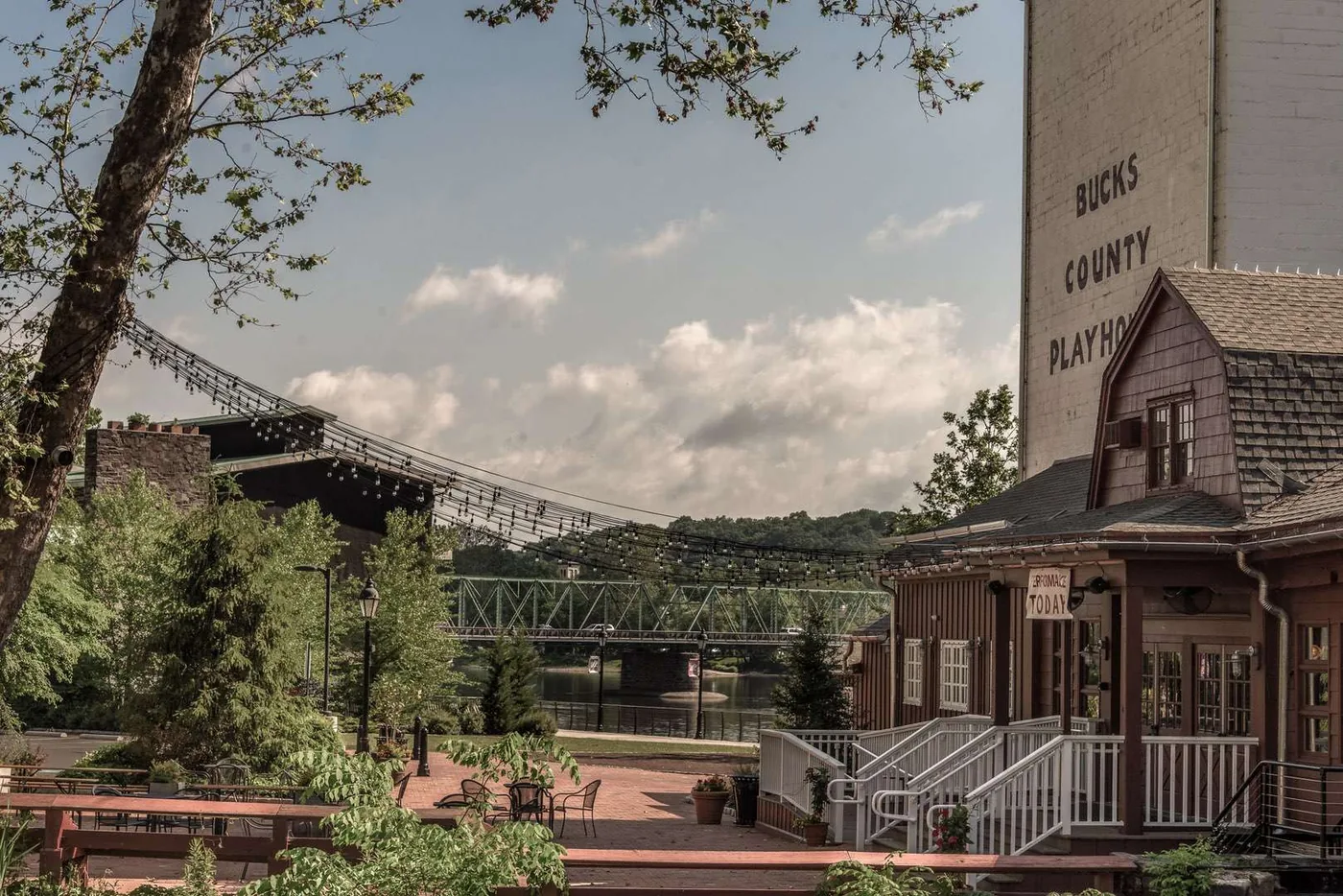
Nearly all of it is within a few blocks. The Parry Mansion at 45 South Main has been standing since 1784. The canal and towpath are one street back. The ferry landing is marked down by the river. The Playhouse is still in Parry's mill, and the bridge to Lambertville sits roughly where the boats used to run.
The buildings along Main Street are mostly eighteenth and nineteenth century and a good number still have their original bones behind the shopfronts. It is a working town that happens to be old, rather than a preserved one, and that is the better version.
We're on Main Street a few doors from the Parry Mansion, with outdoor seating and a bar out front and the kitchen going until late. Come in after the walk.